Tata Steel's long-term value creation is fundamentally linked to how it manages natural capital—encompassing raw materials, water, air, land, and ecosystems that underpin its global operations. Recognising its dual role as a user and steward of natural resources, the Company adopts an integrated approach that combines resource security, environmental efficiency, circularity, and regulatory compliance. This approach is embedded within its sustainability framework and strengthened through programmes such as Project Aalingana, ensuring that environmental responsibility aligns with operational resilience and investor expectations.
One planet promise
Tata Steel is committed to responsible resource management, reducing environmental impact, and restoring ecosystems. Driven by innovation, disciplined operations, and collective accountability, we strive towards a sustainable future for generations ahead.
Raw material
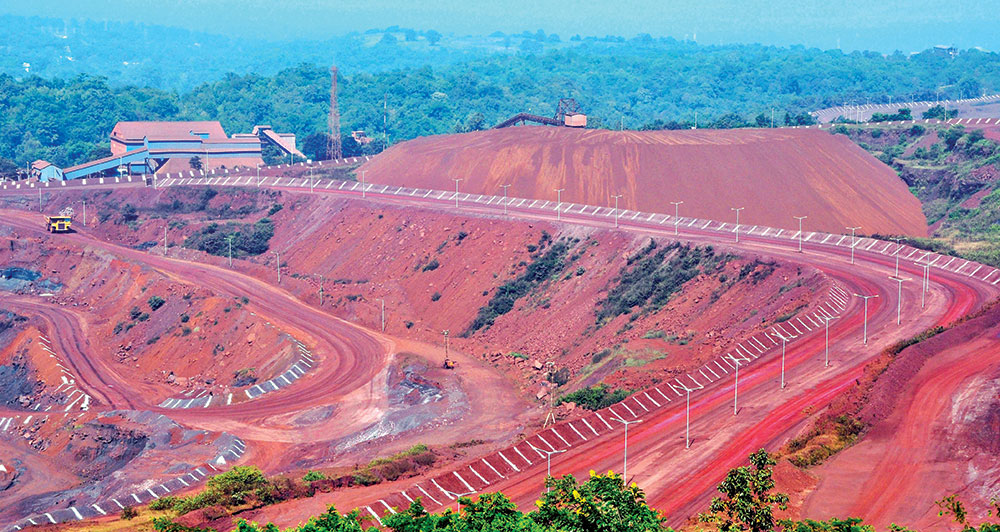
The Company's stewardship begins with the responsible sourcing and utilisation of raw materials. In India, Tata Steel meets 100% of its iron ore requirements through seven captive mines, enhancing supply security while reducing exposure to market volatility. Coal, a key cost and carbon driver, is managed through a combination of captive mining and beneficiation, with approximately 25% of clean coal requirements met through collieries in West Bokaro and Jharia, supported by a beneficiation capacity of 10 MTPA. Resource efficiency is further strengthened through the reuse of middlings, tailings, and rejects, which are deployed in power generation and other applications. Integrated operations across manganese, chromite, and ferroalloys enable value chain optimisation, ensuring that resource extraction is closely aligned with downstream utilisation. Through these measures, Tata Steel enhances raw material security while reducing environmental impact.
Water
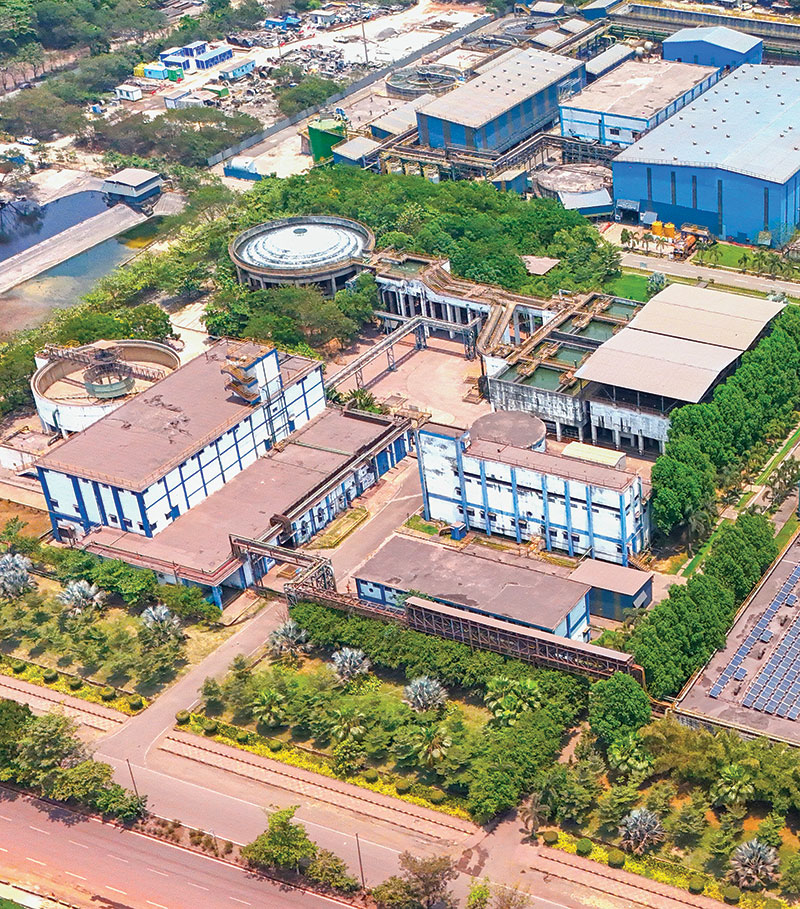
Water stewardship is central to maintaining operational continuity and minimising ecological impact. The Company follows a structured 4R approach — Reduce, Reuse, Recycle, and Recover — supported by continuous investments in water efficiency and recycling systems. During the year, initiatives such as the commissioning of the Biological Oxidation Tertiary Treatment Plant at Jamshedpur and the Central Effluent Treatment Plant at Kalinganagar, alongside the implementation of Zero Effluent Discharge systems at Meramandali, have strengthened water recovery and reuse. These are complemented by rainwater harvesting and process optimisation measures across sites. Tata Steel’s long-term ambition of water replenishment by 2030 guides these efforts, supported by projects such as treated sewage reuse and CETP upgrades. Globally, water management strategies are adapted to local conditions. Tata Steel Nederland prioritises the use of seawater and brackish water, while future steelmaking configurations such as DRP–EAF are expected to further reduce water intensity. This integrated approach mitigates water stress risks while enabling sustainable operations.
Air
Air quality management is closely linked to Tata Steel's broader decarbonisation journey. The Company has implemented continuous emission monitoring systems, source apportionment studies, and advanced pollution control technologies to reduce its environmental footprint. Across India operations, these efforts have resulted in sustained reductions in stack dust emissions over time. In Europe, TSN has achieved a ~41% reduction in PM10 emissions compared to 2019 levels, alongside significant improvements in odour control through targeted interventions. Technological upgrades are expected to deliver further gains: the DeNOx installation at the pellet plant is designed to reduce NOx emissions by ~80%, while the transition to EAF-based steelmaking in the UK is projected to achieve an over 80% reduction in nitrogen emissions and ~90% reduction in particulate emissions from chimneys.
Sustaining the capital
While Tata Steel's operations engage with the environment, utilising both renewable and non-renewable resources for steel production, the Company remains committed to their responsible use. Guided by its Environmental Policy, which focuses on water, waste, air emissions, biodiversity, and circular economy principles, Tata Steel strives to minimise its environmental footprint. All sites are certified to ISO 14001:2015, reinforcing a culture of continuous improvement and environmental accountability. Through sustained efforts in restoring, replenishing, rejuvenating, recycling, and substituting resources, Tata Steel is committed to preserving the long-term sustainability of these critical natural assets.
Scrap for steelmaking
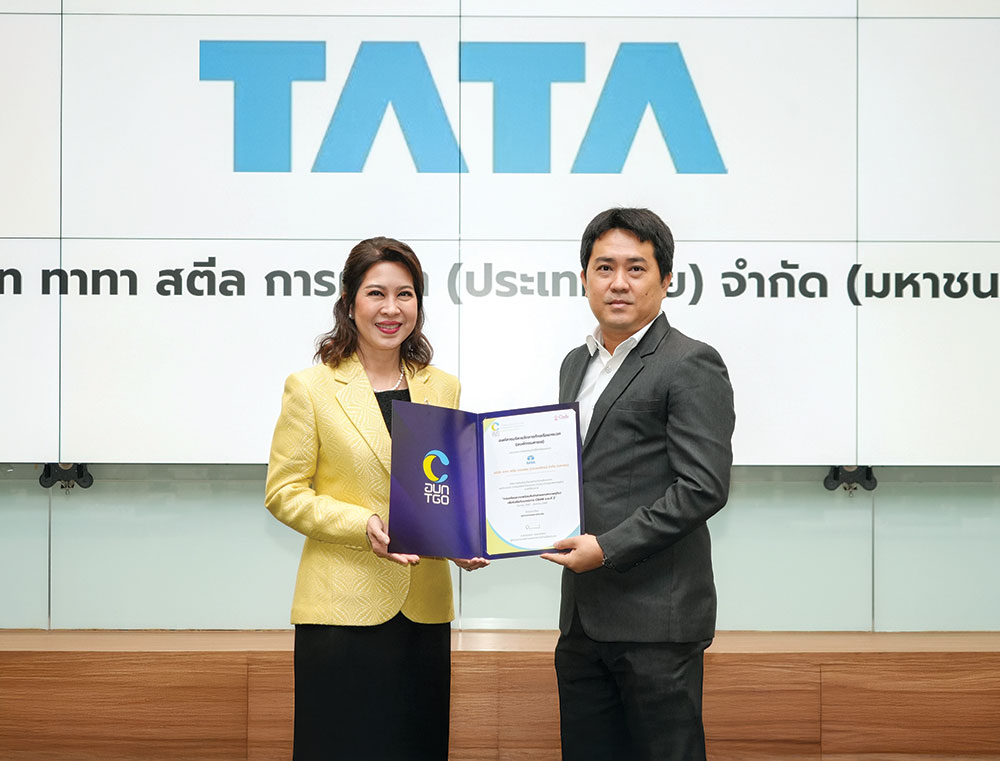
A key pillar of Tata Steel's transition towards sustainable steelmaking is the increased use of scrap, which reduces dependence on virgin raw materials and lowers carbon intensity. In India, the inauguration of the 0.75 MTPA EAF at Ludhiana marks a significant step in expanding scrap-based production, supported by the Steel Recycling Business. Scrap utilisation in India is targeted to reach ~15% by FY2029-30, while globally, the transition is more advanced. The UK's shift to EAF-based steelmaking is expected to raise scrap usage from ~17% to over 70%, supported by the construction of a 3.2 MTPA EAF at Port Talbot. TSN aims to increase scrap usage to ~30% by 2030 (21% in FY2025-26), requiring around 2 million tonnes annually, while TSTH operates entirely on a 100% scrap-based EAF route. These developments demonstrate a structural shift toward circular steelmaking, aligning resource efficiency with decarbonisation objectives.
Biodiversity Management
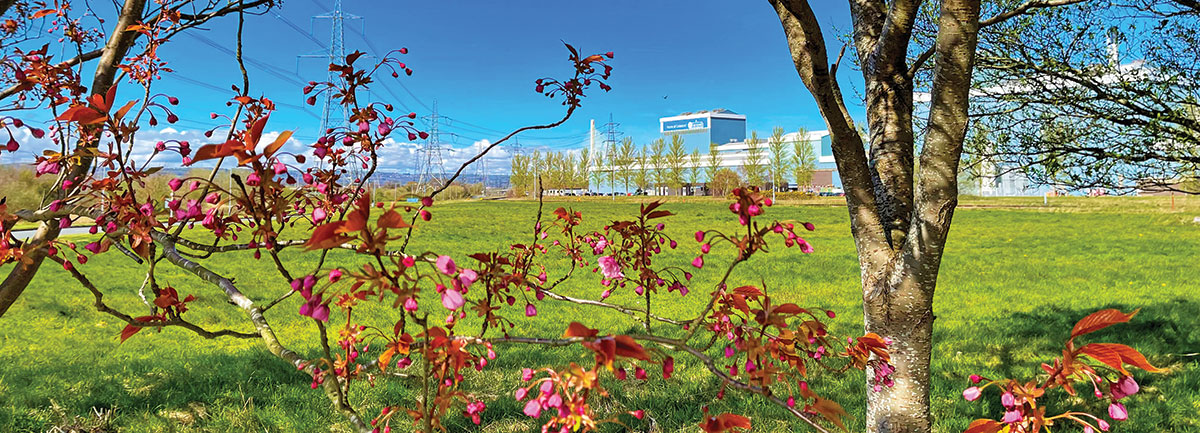
Beyond operational efficiency, Tata Steel recognises the importance of restoring and protecting ecosystems as part of its natural capital strategy. Biodiversity management is guided by science-based frameworks and global standards, including alignment with the Taskforce on Nature-related Financial Disclosures (TNFD). The Company is working toward covering all key sites under Biodiversity Management Plans, supported by structured methodologies that assess habitat condition and ecological impact. Nature-based solutions are central to this approach. The Sukinda Ecorace Tasar silkworm project, implemented on 26 hectares of land, has been validated by IUCN as a Nature-based Solution, demonstrating how conservation and community livelihoods can be aligned. On-ground initiatives include the development of a 25-acre Biodiversity Park at Meramandali and a 12-hectare ecological park at Jamshedpur, alongside afforestation, mine reclamation, and green cover enhancement programmes across sites. Internationally, Tata Steel's Shotton site in the UK has achieved the Biodiversity Benchmark certification, reflecting best-in-class land stewardship practices.
These initiatives not only enhance ecological resilience but also strengthen community relationships and social license to operate.
Solid waste management
The Company's approach to solid waste management reflects a strong commitment to circular economy principles. Tata Steel manages 18-20 million tonnes of by-products annually, converting them into value-added products for infrastructure and construction. Branded products such as Tata Aggreto, Tata Nirman, and Tata Dureco enable the productive use of slag and other materials, reducing landfill dependency.
Internally, ~2,000 KT of scrap is recycled each year, reinforcing circularity within operations. Globally, high utilisation rates underscore the effectiveness of this approach, with 97% reuse at IJmuiden and 99.73% utilisation in Thailand, while landfill disposal in India remains minimal at approximately 0.09% of total waste. In the UK, waste management performance shows 90-96% recycling efficiency, supported by integrated material management strategies and a focus on achieving zero waste to landfill.
The Company is working with leading academic institutions to develop advanced applications such as slag sand, alternative construction materials, and carbon sequestration solutions. Simultaneously, efforts are underway to explore new technologies for handling complex waste streams, including sludge, filter cakes, and process residues, while identifying non-disposal pathways that further reduce landfill dependency.