India is experiencing a phase of rapid economic growth and
is already the world’s second‑largest steel producer. The
National Steel Policy envisions capacity reaching 400 MTPA
by FY2035-36, with demand expected to grow four to five
times by mid‑century, driven by infrastructure expansion
and industrialisation. While this growth is critical for national
development, it also presents significant decarbonisation
challenges, as the sector continues to be dominated by fossil
fuel‑intensive blast furnace–basic oxygen furnace routes.
The transition pathway in India is shaped by several
structural constraints. Limited availability of cost‑competitive
transition fuels such as natural gas restricts the scalability
of gas‑based Direct Reduced Iron (DRI). Scrap availability
remains structurally low due to underdeveloped end‑of‑life
recovery systems, which will take time to mature, limiting the
immediate expansion of scrap‑based steelmaking route. At
the same time, most near‑zero emission technologies are still
in early stages of readiness, making blast furnaces essential
to meet near‑term demand. Regulatory developments are
driving change such as the Carbon Credit Trading Scheme
(CCTS) and the emerging Green Steel Taxonomy are at
inception stage. Tata Steel’s India transition strategy therefore
focuses on progressively reducing fossil fuel dependence
while aligning with national resource realities and its Net
Zero by 2045 ambition. A key milestone in this journey is the
inauguration of a 0.75 MTPA scrap‑based EAF in Ludhiana,
marking a shift toward low‑emission circular steelmaking.
On the energy front, Tata Steel’s electricity mix in India
currently includes by‑product gases and waste heat recovery
(45%), coal (35%), grid supply (18%) and renewables (~2%).
These waste heat recovery systems and dual‑fired boilers
improve energy efficiency and reduce emissions. To enhance
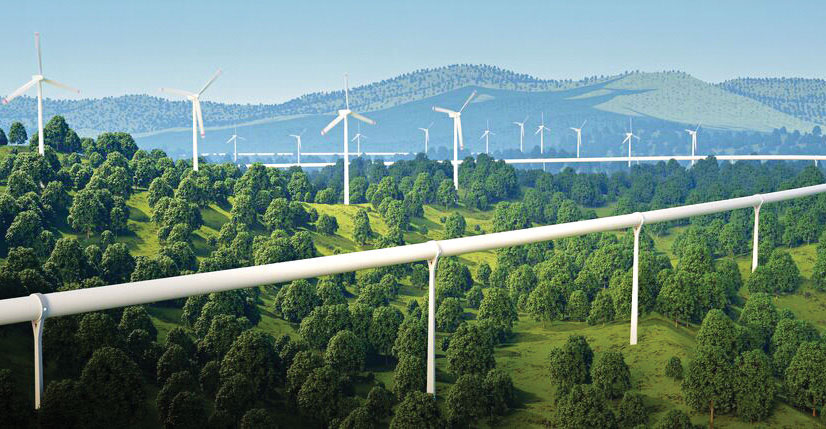
renewable integration, the Company has secured 379 MW
of round‑the‑clock hybrid wind–solar capacity through Tata
Power Renewable Energy Limited (TPREL), corresponding
to 966 MW of installed capacity. This is complemented by
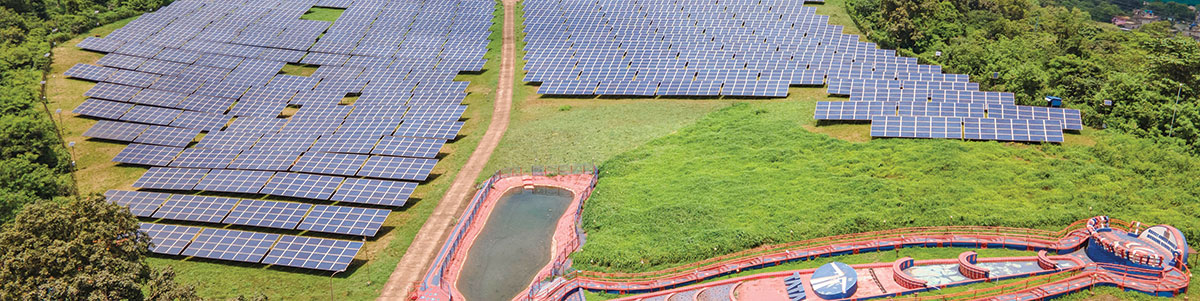
a 70 MW solar project for its Maharashtra operations. There
are rooftop and floating solar installations of 59 MWp across Jamshedpur and Kalinganagar. These
initiatives are expected
to increase renewable energy share from 2.4% (in FY2025-26)
to 6.4% by FY2026–27. Additional measures include piloting
the use of plant‑based biochar to partially substitute fossil
fuels in blast furnaces at Jamshedpur and Meramandali.
To enable deep decarbonisation over the long term,
Tata Steel is advancing first‑of‑its‑kind technologies in
India aimed at transforming the ironmaking process. In
partnership with SMS group, the Company is introducing
the EASyMelt pilot at Jamshedpur — a combined coal and
gas‑based, plasma‑assisted melter capable of reducing CO2
emissions by over 50% compared to conventional routes.
The technology is planned for demonstration at the E Blast
Furnace by 2030, supporting future large‑scale deployment.
In parallel, Tata Steel is progressing the scale‑up of HIsarna
through a proposed 1 MTPA demonstration plant at
Jamshedpur. HIsarna is an innovative smelting technology
that enables the direct use of iron ore fines and powdered
coal, eliminating the need for coke making and sinter plants.
By combining a high‑temperature melting cyclone with a
smelting vessel, it allows ore to be melted and reduced in
a single continuous step, while generating a concentrated
off‑gas stream suitable for carbon capture. The technology
can also utilise lower‑grade raw materials, including those
typical to India, bolstering its relevance and scalability.
In FY2025-26, Tata Steel completed its first Nature-based
Solutions (NbS) assessment for the Sukinda Ecorace
Conservation Project, which was reviewed by IUCN India
and aligned with the IUCN Global NbS Standard. In its
continued efforts to reduce Scope 3 carbon emissions,
the Company doubled the deployment of green vehicles
(vs. FY2024-25) with over 600 green mobility vehicles now
operational for raw material and finished goods movement
across locations. Tata Steel also became the first Indian steel
company to undertake a fully-laden B24 biofuel voyage for
flux shipments from Mina Saqr port (UAE) to India using a
Capesize vessel.