
Reduction in SRM cost (including Raw Material sites)
SRM: Stores and Services, Repair & Maintenance
Tata Steel harnesses collective expertise, innovation, and continuous learning to build a unified thinking engine, driving smarter decisions, operational excellence, and sustained value creation across the organisation.
Tata Steel's Net Zero by 2045 ambition is driven by innovation-led transformation across its value chain. Central to this are two breakthrough ironmaking technologies — HIsarna, a patented Tata Steel innovation, with industrial-scale demonstration planned at Jamshedpur, that enables the use of domestic coal and low-grade iron ore with significantly lower emissions, and EASyMelt, which can cut coke use and CO2 emissions by up to 50%. TSN's advanced packaging steel line and Tata Steel's MoU with the University of Science and Technology Beijing further reinforce its commitment to sustainable, recyclable, and future-ready steel solutions.
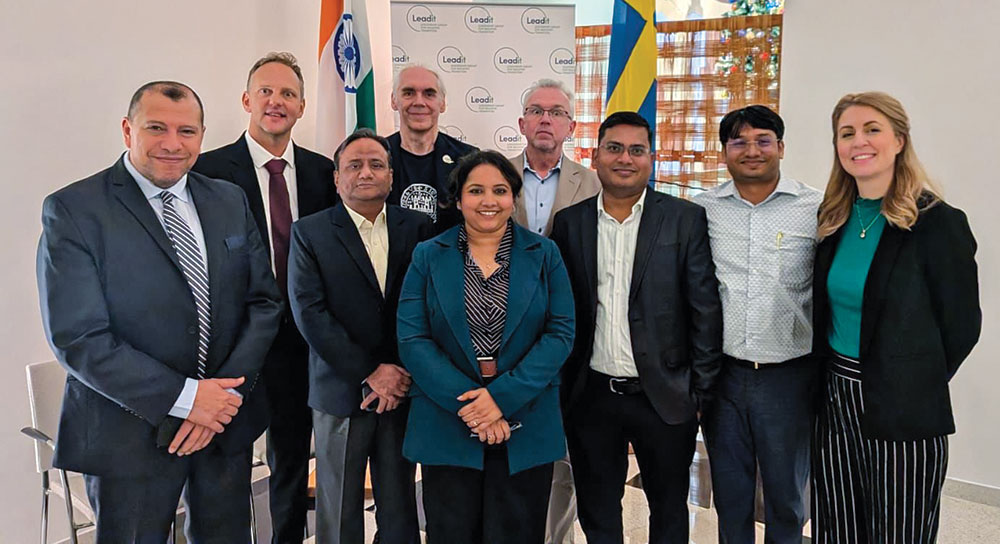
Global partnerships further accelerate decarbonisation, including Indo-Sweden–funded initiatives such as MiCOBlast to valorise blast furnace off-gases using microwave plasma and Steel Slag Reborn to recover metallic value from slag while converting residues into sustainable cement inputs. Operational innovations—such as thermal energy storage with Kraftblock, biofuel injection in blast furnaces, and patented coal-combustibility solutions—deliver tangible emissions reductions. These efforts are supported by strong IP stewardship, reflected in Tata Steel's recognition as Asia IP Elite 2025.
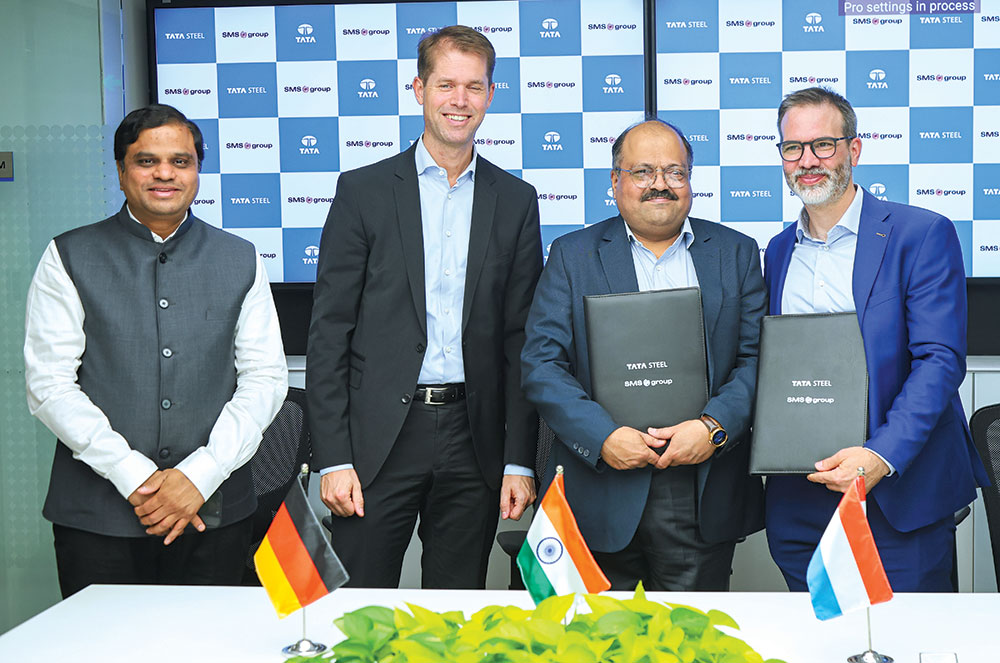
Tata Steel Limited's Shikhar25 initiative identifies and accelerates improvements in projects related to operational excellence and cost optimisation across the value chain. In FY2025-26, Shikhar25 achieved performance improvements amounting to ₹5,748 crore traceable to financial statements.
In addition to it, the programme achieved value protection savings amounting to ₹1,726 crore.
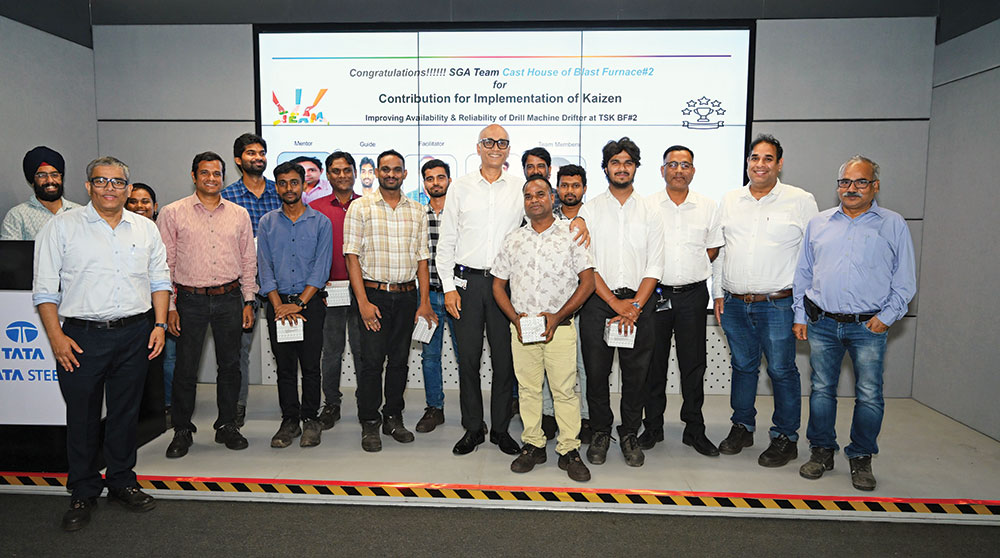
In FY2025–26, Tata Steel strengthened TQM excellence by launching the first IFQM (Indian Foundation for Quality Management)–Tata Steel MSME Cluster with six MSMEs and identifying 15 best practices from IFQM missions. Over 12,000 ASPIRE projects, 3,500+ Kaizens, and 5,309 Quality Circles drove shopfloor innovation and set new shutdown performance benchmarks. Capability building included training 3,700+ employees in 5 TQM competencies and developing 124 SMEs, supported by new platforms like the Daily Management School of Excellence. In TSTH, the AI & Analytics Mind 2025 platform was launched to institutionalise data-driven capability building, showcasing 128 innovative projects.
These efforts earned global recognition across India, the UK, the Netherlands, and Thailand, reinforcing Tata Steel's leadership in operational excellence and stakeholder value.
Reduction in SRM cost (including Raw Material sites)
SRM: Stores and Services, Repair & Maintenance
Reduction in GAGW spend (including Raw Material sites)
Reduction in freight & handling cost
Profit through ~4,400 kT iron ore sale by increasing production and dispatch
Savings by smart material optimisation through optimising pooled iron/ferro-shots and utilising internally processed steel scrap over purchased scrap at Steel Melting Shops
Reduction in coking coal cost through leaner coal blend, increased domestic coal in blend, and commercialisation of new coals
Savings through improved DRI production and enhanced performance across Profit Centres and downstream businesses
In FY2025-26, Tata Steel strengthened its Industry 4.0 foundation through large-scale AI adoption and integrated digital operations, driving measurable improvements in productivity, cost efficiency, and operational resilience. Central to this progress was a significant surge in Narrow (mathematical AI running on large datasets like Operations and Forecasting) and Generative AI (Creative, conversational, language-based) initiatives, with 860 models and agents deployed across the value chain to enhance employee and customer experiences, safety, and autonomous business processes.
FY2025-26 saw the adoption of over 300 agents automating complex tasks such as invoice processing, audit functions, and commercial intelligence. The Tata Steel Digital Assistant (TDA) was upgraded to an agentic architecture, providing a secure, unified interface running on public data and corporate data with complete data privacy and sovereignty. We invested in creating customised architecture for TDA to map the underlying organisational knowledge and business context to support the models. Sustained user engagement will help improve its understanding of our business context and processes, thereby further enhancing its maturity to deliver sharper and more personalised results.
Data governance reached a milestone with 98% completion of key data and KPI definition standards across major Indian units. The deployment of the DATOM framework across geographies has shifted leadership KPI reporting from manual to system-driven, embedding AI into the core management cadence.
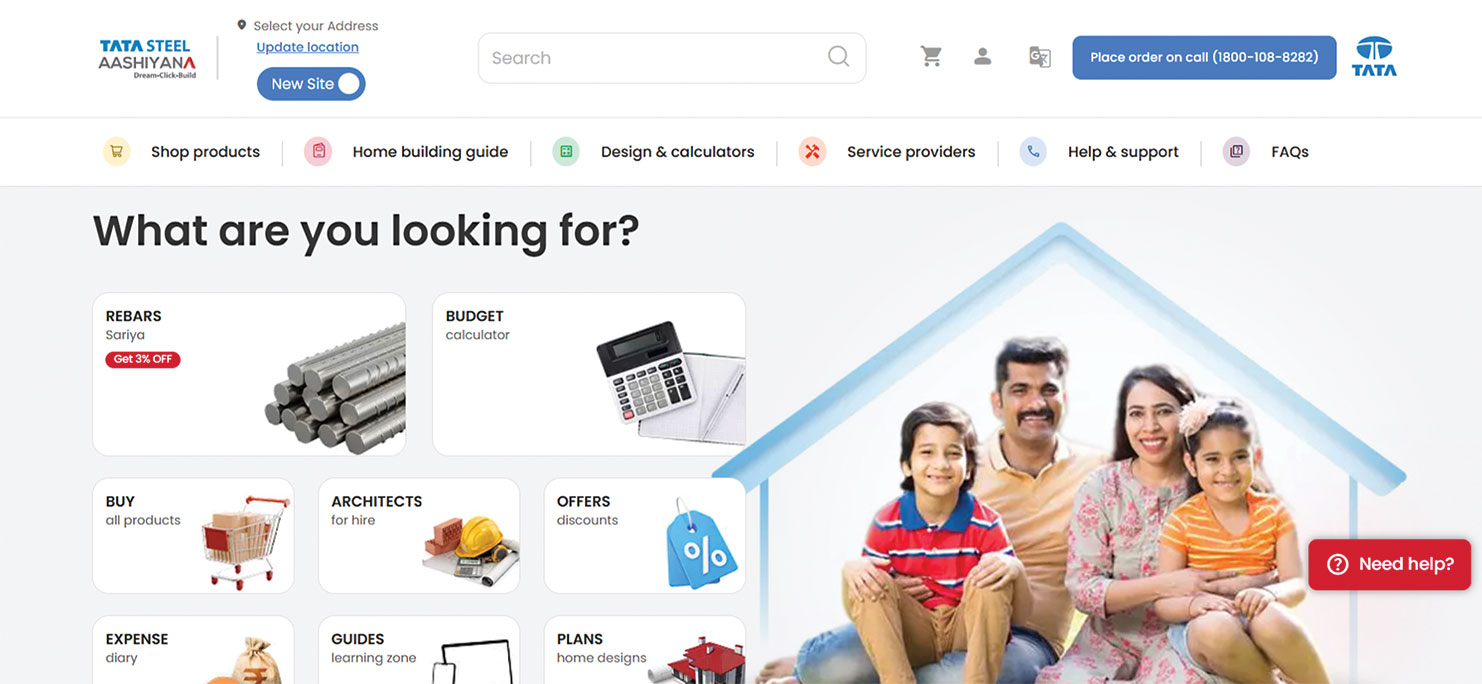
Our Manufacturing Excellence journey continued with AI-enabled Remote Operations & Maintenance, facilitating predictive, real-time asset management. Tata Steel strengthened its customer ecosystem through digitally-enabled, product-focused, and service-led initiatives. The Tisca Chatbot enabled lead capture for 22,000+ influencers and dealers, while TSL Cares, the industry's first GenAI enabled grievance platform, routed 90% of customer complaints through a unified system. Digital platforms expanded further, with Aashiyana serving 2 lakh+ homebuilders, achieving a Net Promoter Score of 82, and onboarding 10,000+ sellers; DigECA improving order efficiency for 4,500+ SMEs; and COMPASS strengthening B2B collaboration. We also saw significant reduction in complaint resolution times for customers. In our vision for One Tata Steel, a strategic milestone was the 'lift and shift' of TSUK IT systems to India, harmonising technology platforms across our operations for cost competitiveness and building on existing expertise.
Supported by enhanced cybersecurity and unified SAP landscapes, Tata Steel continues to consolidate its position as an Industry Digital Advanced Leader in the Gartner Digital Execution Survey sixth time in a row, and 78% of the steel we make comes from WEF Global Industry Lighthouse sites in IJmuiden, Kalinganagar and Jamshedpur.