Tata Steel’s material ESG priorities are shaped through robust
stakeholder engagement and systematic assessments.
By conducting periodic materiality studies, the Company
gains clear insights into stakeholder expectations, impacts,
dependencies and opportunities to identify areas of strategic
importance. This process enables Tata Steel to effectively
prioritise stakeholder needs and integrate them into decision
making, ensuring sustainable and long-term value creation.
Since FY2012-13, Tata Steel has been conducting periodic
materiality assessments to understand key stakeholder
issues and focus areas to prioritise the Company’s risks and
opportunities. The last assessment, completed in 2023, was
a double materiality assessment that included input from
stakeholders across all our operating regions: India, Thailand,
the Netherlands, and the UK. We adopted a dual approach to
assess the significant impacts that society, the environment,
and the economy have on our business, as well as the effects
our operations have on economic, environmental, and social
well-being. The next cycle of this assessment is planned for
the upcoming year, and its outcomes will shape our future
sustainability priorities and disclosures.
The 2023 material assessment was performed on a
consolidated basis through a systematic stakeholder
consultation led by an independent agency, following best-inclass
international standards. It has helped Tata Steel identify
the top 15 ESG issues, material to its business and is integral
to its vision of being the global steel industry benchmark for
Value Creation and Corporate Citizenship. The assessment is
aligned with the guidance from International Standard Setting
Bodies, including but not limited to Global Reporting Initiative
(GRI), Sustainability Accounting Standards Board (SASB) and the
Integrated Reporting <IR> Framework, covering both general
standards and sector-specific standards related to iron and
steel, and metals and mining industries. Material topics are
further linked to the requirements of GRI, SASB, World Steel
Association (WSA), Business Responsibility and Sustainability
Reporting (BRSR), and World Economic Forum (WEF).
The risks arising out of material issues are assessed as per
the organisation’s Enterprise Risk Management process
and framework.
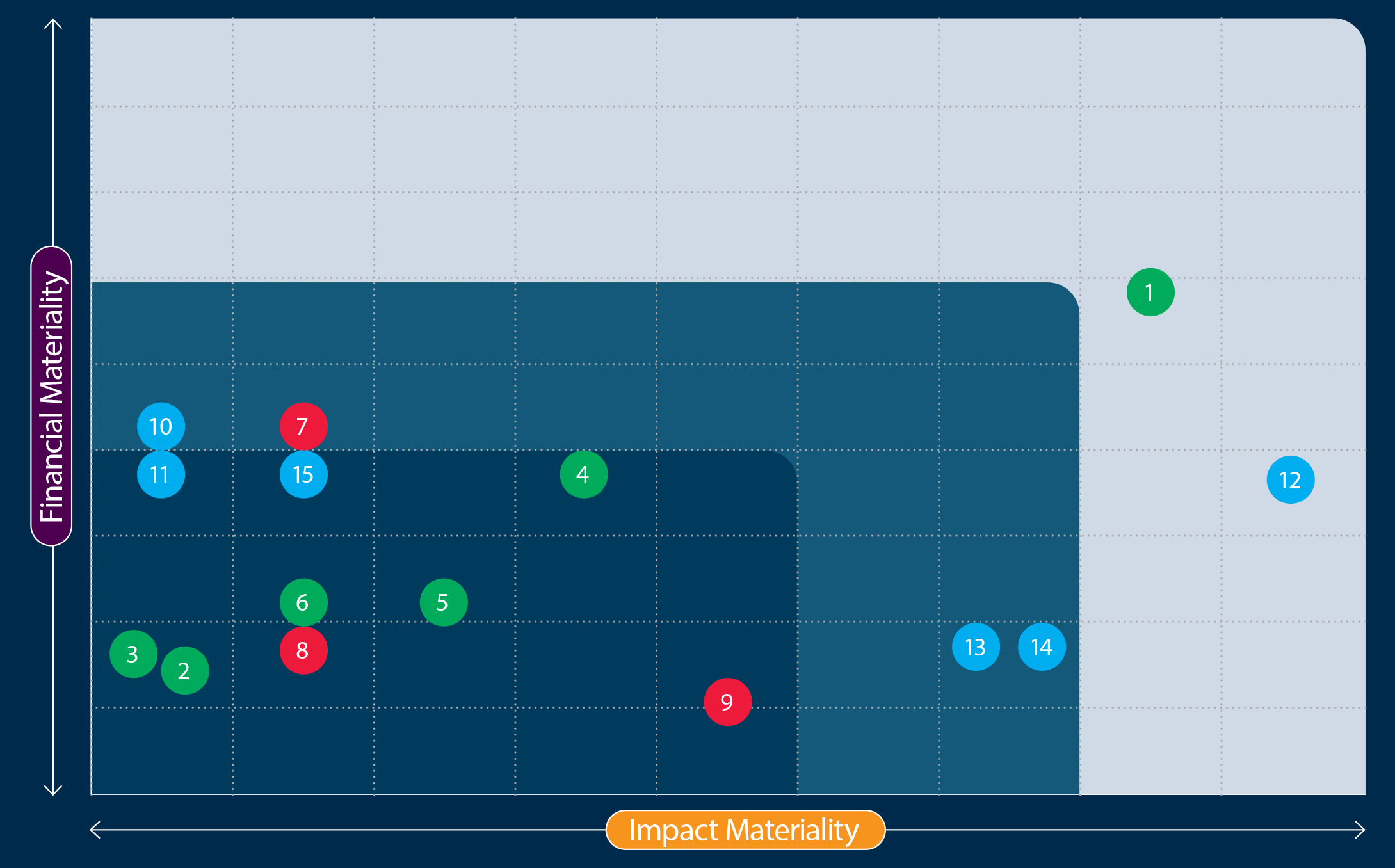
There are two aspects of Tata Steel's materiality assessment:
Impact Materiality: Determined by the scale,
scope, and irreversible nature of the impact, this factor considers the effects on both people and the
environment.
Financial Materiality: Determined by the risks
and opportunities, this factor considers the impact on the organisation's financials.
Stakeholders considered
In accordance with the AA1000 Stakeholder Engagement Standard, Tata Steel's
insights
and their independent assessment, the independent agency identified the following stakeholders for the
purpose of materiality assessment:
- 1 Investors and Lenders
- 2 Customers
- 3 Vendor Partners/Suppliers
- 4 Government and Regulatory Bodies
- 5 Employees
- 6 Community
- 7 Media
- 8 Industry Bodies
- 9 Senior Management
- 10 Contract Workforce
- 11 NGOs
 MATERIALITY
 Human Capital