




CONTRIBUTION TO UN SDGs

One shared future

Tata Steel integrates the UN SDGs into its business strategy, aligning operations, innovation, and community initiatives to drive inclusive growth, environmental stewardship, and long-term value creation for all stakeholders.

Financial Capital Financial Capital
Manufactured Capital Manufactured Capital
Human Capital Human Capital
Social & Relationship Capital Social and Relationship Capital
Intellectual Capital Intellectual Capital
Natural Capital Natural Capital
x/x Targets relevant
SDG 1 No Poverty
5/7
Social Capital

SDG 1 — No Poverty

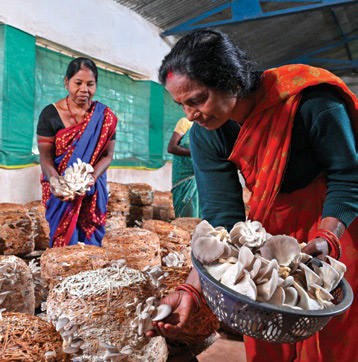
Women entrepreneurs engaged in mushroom cultivation

1.1 Agriculture and allied activities

Farmer households impacted through agriculture and allied activities (lakh)

FY24
0.9
FY25
1.2
FY26
1.4

Key Impact Areas

  • 1,230 Households covered under protected cultivation
  • 31,474 Households have access to weather and agro-based advisories
  • 18,918 Households leveraging government schemes
  • 2,595 Households adopted solar energy based initiatives
  • 8,896 Households adopting soil testing and have soil health card

1.2 Community enterprises

Women engaged in micro enterprises (nos.)

FY24
3,092
FY25
3,153
FY26
4,411

`19 crore Sales through micro-enterprises

`188 lakh Annual turnover of cooperatives formed engaging 2,500 artisans

1.3 Skill development

Lives impacted through Model Career Centre (nos.)

FY24
10,191
FY25
9,263
FY26
17,098

1.4 Grassroots Governance System

Individuals received entitlement linkages (nos.)

FY24
44,039
FY25
47,842
FY26
72,684

1.5 Public Health – Maternal and Newborn Survival Initiative (MANSI+)

Severe Acute Malnutrition (SAM) and Moderate Acute Malnutrition (MAM) cases identified out of total Under-5 children reached (nos.)

FY25
3,288
FY26
1,508

55% (1,767) Under-5 SAM & MAM children gained normal weight-for-height/length

1.6 Education Signature Programme

Out of school children brought back into system (nos.)

FY24
6,932
FY25
22,489
FY26
2,961

1.7 Disability (Sabal)

PwDs linked to livelihoods (nos.)

FY24
95
FY25
292
FY26
277

1.8 Public health

25,076 Adolescent girls, pregnant women and reproductive age women with anaemia improved HB level under Poshan programme

60% (6,753) Under-5 SAM & MAM children gained normal weight-for-height/length

1.9 Water

2 lakh Lives impacted through drinking water programme

1,127 Drinking water structures created and repaired

1.10 DISHA programme

8,076 Women linked to government schemes, entitlements and Tata Steel Foundation programmes

1.11 Urban Habitat

51,322 Slum dwellers households received entitlement and linked to different government development schemes

SDG 2 Zero Hunger
4/8
Social Capital

SDG 2 — Zero Hunger

2.1 Poshan

Project for combating malnutrition among Under-5 children and anaemia among adolescent girls and women of reproductive age.

Lives impacted (nos.)

FY24
49,269
FY25
53,849
FY26
99,983

1,951 Household nutrition gardens developed

2.2 Agriculture and allied activities

Harvested major crop yield (quintal/acre)

FY24
21.0
FY25
21.7
FY26
22.3

38,945 Women farmers engaged

6,649 Households engaged in agriculture value chain process

8,408 Households adopting water efficient technologies (drip irrigation, rain pipe-based irrigation, sprinkler, mulching, etc.)

16,658 Farmers engaged in in-land fisheries

2.3 Public health (MANSI+)

Sick children under 5 years age (including infants and high risk cases) who were suffering from SAM, childhood diseases and/or ailments and have been stabilised (%)

FY24
84
FY25
92
FY26
94
SDG 3 Good Health and Well-being
4/13
Social Capital

SDG 3 — Good Health & Well-being

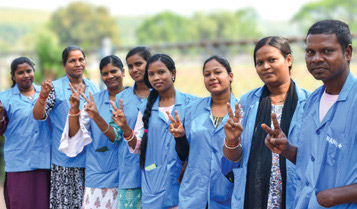
MANSI Mitras – bridging healthcare gaps for rural women and children

3.1 Public health

50,436 Adolescents trained on Adolescent Reproduction and Sexual Health (ARSH) and Life skill education

1,07,537 People reached through outreach healthcare services

4,19,178 Eligible population screened for vector-borne diseases

2,66,842 Eligible population screened for non-communicable diseases

2,141 Healthcare workers trained in prevention of non-communicable diseases

92,536 Eligible women trained on breast self-examination

Child marriage prevalence reduced to 0.23%

540 Married adolescent girls delaying pregnancy

Incidence of malaria per 1,000 population reduced to 0.06 API (Annual Parasite Incidence)

Adolescent Fertility Rate (AFR) reduced to 9.99 per 1,000 women aged 15–19 years

3.2 Public health (MANSI+)

High risk pregnant women prevented from maternal mortality out of total identified women, who have completed 42 days post delivery or died within same period (nos.)

FY24
19,762
FY25
5,630
FY26
9,168

55,212 Children stabilised out of identified Under-5 sick children (including high risk)

SDG 4 Quality Education
8/10
Human Capital Social Capital

SDG 4 — Quality Education

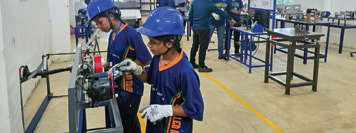
Skill Development at Industrial Training Institutes

4.1 Education Signature Programme

Children reached through programme (nos.)

FY24
7,28,344
FY25
8,09,525
FY26
8,19,902

1,88,956 Children currently in pre-primary (Anganwadi)

41,314 Children transitioning from pre-primary to primary

90 Gram panchayats declared themselves Child Labour-free Zones

4.2 Tribal Language Programme

Lives impacted through tribal language classes (nos.)

FY24
40,640
FY25
45,043
FY26
45,700

4.3 Skill development

Lives impacted through long- and short-term courses (nos.)

Total Trained Girls
FY24
2,4903,673
FY25
2,8805,355
FY26
3,3937,299

Youth placed through long- and short-term courses/ self-employed (nos.)

Total Trained Girls
FY24
2,1643,176
FY25
1,2332,230
FY26
1,4493,148

8,548 Youth connected through Model Career Centre for job opportunities

2,152 Lives impacted through vocational courses for children in formative age

4.4 Disability

PwDs linked to higher education (nos.)

FY24
33
FY25
15
FY26
11

334 Girls and women with disability trained at Sabal

4.5 Masti Ki Pathshala

Children reached across Jamshedpur slums (cumulative) (nos.)

FY24
4,217
FY25
5,406
FY26
7,306

6,869 Children mainstreamed to public schools (cumulative)

3,484 Children in Foundational Learning and Numeracy

65 Bastis declared themselves Child Labour-free Zone (cumulative)

121 Children enrolled under Right to Education quota

2,024 Women covered under Functional Literacy Programme

4.6 Pre Matric Coaching (PMC)

Children covered through PMC (nos.)

FY24
9,300
FY25
10,038
FY26
9,967

4.7 Computer skills and English learning

Youth and children covered through Computer and English courses (nos.)

FY24
3,055
FY25
4,017
FY26
4,322

26 Operational centres

4.8 Green School Project

Children engaged in projects on water, waste, energy, biodiversity, and forests (nos.)

FY24
23,723
FY25
44,831
FY26
59,672

193 Schools brought under the project

4.9 Coaching for school children

Children covered (nos.)

FY24
2,929
FY25
2,788
FY26
5,853

4.10 School Infrastructure projects

Structures covered (nos.)

FY24
76
FY25
67
FY26
97

32,858 Children impacted with the project

4.11 Jyoti Fellowship

Fellows (nos.)

Total Fellows Girls
FY24
6,50610,283
FY25
5,75810,594
FY26
7,40011,129

2,165 Schools reached

4.12 Tata Steel Scholars

Scholars (nos.)

Total Scholars Female Scholars
FY24
48170
FY25
47168
FY26
60191

4.13 Akanksha

Children from Particularly Vulnerable Tribal Group enrolled (nos.)

Total Children Girls
FY24
281512
FY25
297524
FY26
303542

4.14 Support to SC/ST youth for professional exams

Youth enrolled in coaching (nos.)

FY24
799
FY25
2,526
FY26
1,478
SDG 5 Gender Equality
4/9
Human Capital Social Capital

SDG 5 — Gender Equality

5.1 DISHA programme

Women participating in rural institutions (Gram Sabha, social institutions, etc.) (nos.)

FY24
3,025
FY25
4,528
FY26
5,820

1,808 Women linked to government schemes and Tata Steel Foundation programmes

914 Trained women in selected decision-making positions in institutions

435 Social issues taken up by women leaders

131 Issues resolved in Gram Sabha and decisions taken

264 Community-led initiatives (We for Change) undertaken

83 Badlav Manch created as a platform

29 Gender-inclusive Gram Panchayat Development Plans prepared

5.2 Public health (RISHTA)

Married adolescent girls delaying pregnancy (nos.)

FY24
1,392
FY25
569
FY26
540

50,436 Adolescents trained on ARSH and Life skills education

5.3 Masti Ki Pathshala

Girls engaged in the programme (nos.)

FY24
2,119
FY25
3,772
FY26
4,789

5.4 Public health (MANSI+)

Identified underage married girls successfully delayed pregnancy (%)

FY24
91
FY25
88
FY26
90

5.5 Digital literacy programme

34,007 Women received digital literacy training and using technology and e-services

SDG 6 Clean Water and Sanitation
8/8
Manufactured Capital Social Capital Natural Capital

SDG 6 — Clean Water & Sanitation

6.1 Drinking water

Beneficiaries gained access to drinking water (nos.)

FY24
1,95,000
FY25
1,96,433
FY26
2,00,017

261 Drinking water structures created

866 Drinking water structures repaired

6.2 Water harvesting structures

Annual water recharge potential created (million cubic meter)

FY24
8.39
FY25
8.47
FY26
6.06

624 Water harvesting structures created

31,323 Lives impacted through water conservation projects

SDG 7 Affordable and Clean Energy
2/5
Financial Capital Manufactured Capital Social Capital Natural Capital

SDG 7 — Affordable & Clean Energy

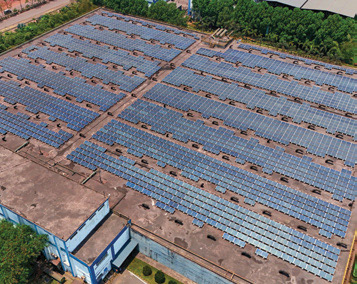
Greening the energy mix at Kalinganagar plant

7.1 Infrastructure

722 Solar structures installed

21.51 kW Renewable energy generated

SDG 8 Decent Work and Economic Growth
7/12
Financial Capital Manufactured Capital Human Capital Social Capital

SDG 8 — Decent Work & Economic Growth

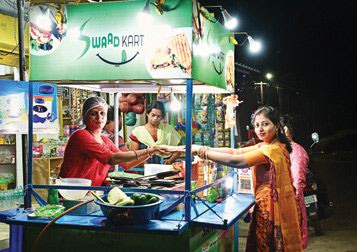
Swaadkart – empowering rural women entrepreneurs in West Bokaro

8.1 Agriculture and allied activities

Indicators explained in SDG1

8.2 Skill development

Indicators explained in SDG1

8.3 Community enterprises

Indicators explained in SDG1

8.4 Jyoti Fellowship

Indicators explained in SDG4

8.5 Disability

Indicators explained in SDG 4

8.6 Masti ki Pathshala

Indicators explained in SDG 4

8.7 Education Signature Programme

Indicators explained in SDG 4

8.8 Employee representation, turnover and productivity

ESG Factsheet

8.9 Workplace safety

ESG Factsheet
SDG 9 Industry Innovation and Infrastructure
4/8
Financial Capital Manufactured Capital Intellectual Capital Human Capital Social Capital

SDG 9 — Industry, Innovation & Infrastructure

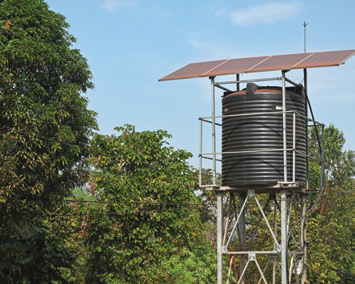
Solar drinking water project

9.1 Infrastructure

Lives impacted through rural infrastructure projects (nos.)

FY24
1,86,998
FY25
2,25,965
FY26
2,32,125

722 Structures built with renewable energy footprint

899 Infrastructures created and renovated

9.2 Grassroots Governance System

145 Panchayats developed Gram Panchayat Development Plans

72,684 Individuals received entitlement linkages

SDG 10 Reduced Inequalities
2/10
Human Capital Social Capital

SDG 10 — Reduced Inequalities

Swaadkart – empowering rural women entrepreneurs in West Bokaro
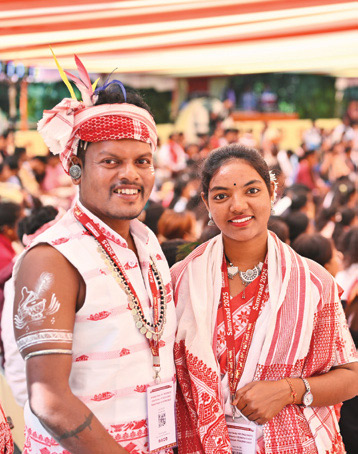
Samvaad 2025

10.1 Grassroots Governance System

Panchayats organised regular Gram Sabha (nos.)

FY24
68
FY25
69
FY26
68

10.2 Disability

Eligible PwDs linked to government schemes (nos.)

FY24
2,763
FY25
774
FY26
3,689

10.3 Tribal Identity

Lives impacted through Samvaad Conclave and Regional Samvaad (nos.)

FY24
3,840
FY25
3,943
FY26
4,856

2 Platforms created through Samudaay Ke Saath

3 Rhythms of the Earth band visible on national platforms

11 Market editions of Johar Haat completed

98 Youth leaders engaged through the Tribal Leadership Programme

SDG 11 Sustainable Cities and Communities
8/10
Social Capital Social Capital Manufactured Capital Natural Capital

SDG 11 — Sustainable Cities & Communities

11.1 Tribal identity

Lives impacted through tribal language classes (nos.)

FY24
40,640
FY25
45,043
FY26
45,700

12 Tribal languages covered

SDG 12 Responsible Consumption and Production
8/11
Manufactured Capital Social Capital Natural Capital

SDG 12 — Responsible Consumption & Production

12.1 Waste management

ESG Factsheet

12.2 Water conservation

Indicators explained in SDG6

12.3 Urban habitat

Indicators explained in SDG1

12.4 Tribal Identity

Indicators explained in SDG10
SDG 13 Climate Action
3/7
Financial Capital Manufactured Capital Social Capital Natural Capital

SDG 13 — Climate Action

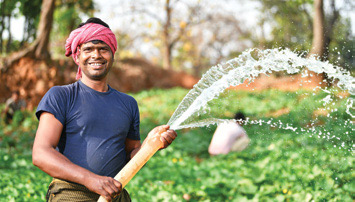
Supporting agriculture and allied activities

13.1 Green School Project

Indicators explained in SDG4

13.2 Water conservation

Indicators explained in SDG6

13.3 Greenhouse Gas (GHG) emission

ESG Factsheet

13.4 Agriculture & allied activities

Indicators explained in SDG1
SDG 15 Life on Land
8/12
Natural Capital

SDG 15 — Life on Land

15.1 Species under revival

Black Buck, Indian Peafowl and Sukinda Ecorace Silkworm

15.2 Environment

1 Endangered species under conservation (Life below water)

3 Endangered species under conservation (Life on land)

SDG 17 Partnerships for the Goals
2/19
Social Capital Social Capital Natural Capital

SDG 17 — Partnerships for the Goals

17.1 Impact ecosystem

38 Partnerships formalised to strengthen existing programmes and organisational systems

46 Civil society organisations supported

17.2 Collaborations with technology providers, startups, and academia

5 Academic programmes formalised with Business Schools