Climate Change Report
Steel is vital for sustainable growth but remains a hard-to-abate sector. While traditional coal-based blast furnaces dominate production, they carry a heavy environmental cost. Cleaner alternatives like EAF offer promise, but global efforts must balance technology, resource access, and financial viability to reduce emissions and enable a just and sustainable transition.
Inclusive engagement for a sustainable future
The global steel industry faces challenges such as excess capacity in China, declining demand in developed nations, and rising costs, which hinder investment in transformation. Key solutions include fiscal support for transitions, clean energy policies, fair carbon pricing, incentives for low-emission steel, regulations for scrap sourcing, and Nature-based Solutions (NbS).
Tata Steel recognises the links between climate change, biodiversity loss, and resource depletion. Committed to decarbonisation, the Company is transitioning to a 3.2 MTPA electric arc furnace (EAF) in the UK by 2027, aiming to reduce CO2 emissions by around 50 million tonnes over a decade while utilising local scrap. Tata Steel also operates EAF facilities in Thailand and is planning its first scrap-based facility in Ludhiana, India. These initiatives include pioneering biochar usage, enhancing ecosystem resilience through responsible mining and water recycling, investing in NbS, and collaborating with the Dutch Government to address CO2 emissions, community health and other environmental factors.
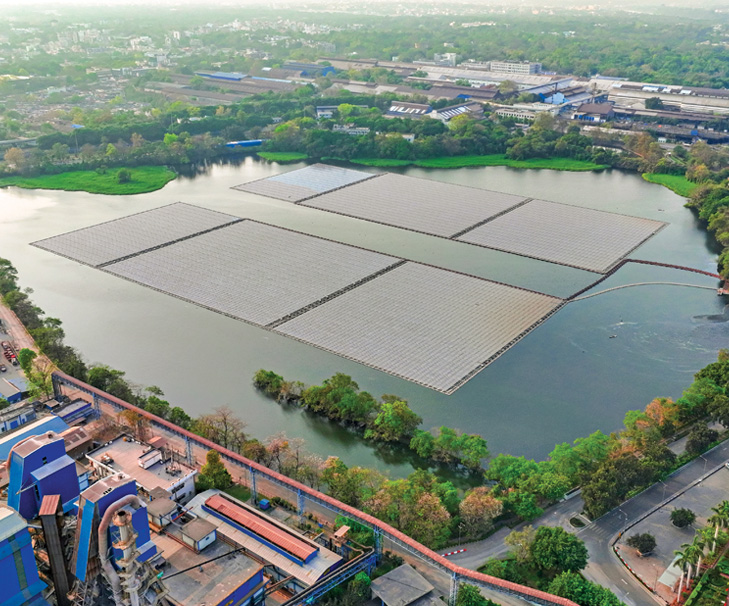
Integrating TNFD Recommendations
As a member of the Taskforce on Nature-related Financial Disclosures (TNFD), Tata Steel has actively shaped and now adopted the TNFD recommendations, integrated with the Task Force on Climate-related Financial Disclosures (TCFD)1. The Company has conducted thorough climate-risk assessments across key steelmaking sites, integrating these findings into its Enterprise Risk Management framework and assessed nature-related dependencies, risks, and opportunities for its India operations, leveraging third-party analytical tools. The report provides a comprehensive view of climate and nature-related risks and opportunities. It is aligned with IFRS S2 (formerly TCFD) and TNFD recommendations. By formulating its disclosures around the four pillars, i.e., Governance, Strategy, Risk Management, and Metrics & Targets, Tata Steel ensures alignment with global best practices.
1 The Financial Stability Board (FSB) created the TCFD in 2015 to improve and increase reporting of climate-related financial information. Following the release of the Task Force’s 2023 Status Report, upon request of the FSB, the TCFD has been disbanded, as it has fulfilled its remit. The FSB has asked the IFRS Foundation to take over the monitoring of the progress of companies’ climate-related disclosures.
Tata Steel has identified 'Leadership in Sustainability' as a key strategic goal, with oversight from Board Committees: i. CSR & Sustainability Committee, and ii. Safety, Health & Environment Committee. These are supported by the relevant Apex Committees chaired by the CEO & MD, focusing on strategic planning, risk management, and performance reviews. Two Centres of Excellence (CoEs) have been created for GHG Emissions Reduction and Biodiversity Management, with oversight into funding for sustainability-related projects. The Total Operational Performance (TOP) programme has been institutionalised to help identify and execute sustainability projects.
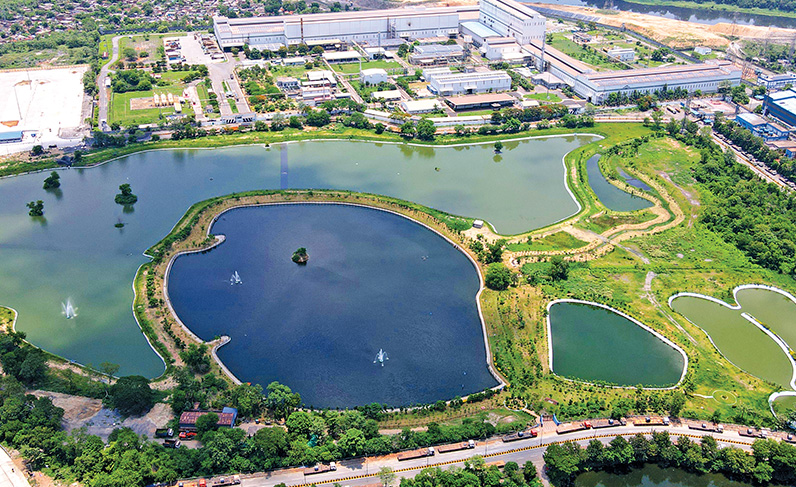
The strategic approach towards climate and nature varies by operating geography, considering the unique regulatory requirements, policy environment, market scenario and technological capabilities.

Tata Steel has adopted low-emission steelmaking practices such as EAF-based steelmaking and use of non-fossil fuel alternatives in iron making. We plan to increase renewable energy in our power mix. The regulatory environment in India is changing with the introduction of the Carbon Credit Trading Scheme (CCTS) and Taxonomy of Green Steel, aimed to incentivise decarbonisation. The Company is actively engaging with regulatory authorities and the Ministry of Steel to shape the above policies. Additionally, we have launched India’s first Carbon Bank to offer low-emission products to our customers.

Tata Steel UK is building a 3.2 MTPA EAF-based steelmaking facility to reduce its direct emissions by ~90%. The project will also bolster steel security and leverage domestically available scrap steel, promoting value addition and achieving benchmark levels of circularity for high quality steel.

Tata Steel Nederland (TSN) is continuously working with the Dutch government to facilitate its transition under the Groen Staal Plan (Green Steel Plan). This will be an integrated decarbonisation and environmental measures project with specific KPIs on CO2, particulate matter, other emissions and factors considered important to the quality of life of the local community. TSN also supports the decarbonisation journey of its customers through product innovations such as Zeremis® Carbon Lite and Zeremis® Recycled.
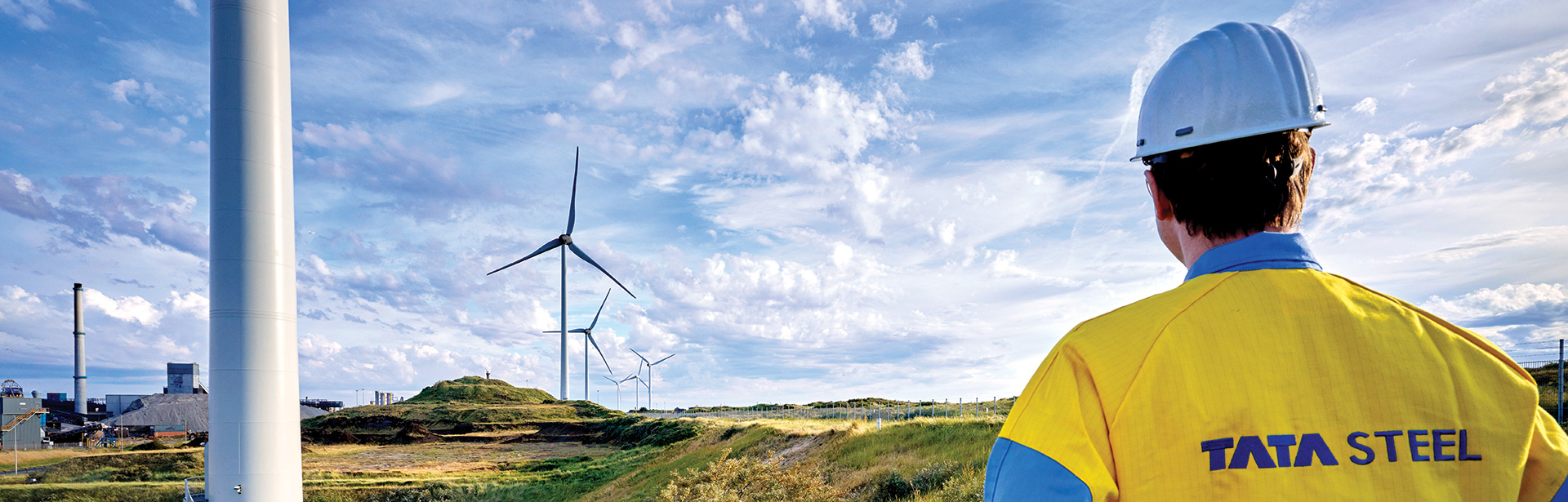
Tata Steel’s growth and decarbonisation strategy in India is aligned with India’s overall strategy towards the industry local regulations and the country’s financial, economic, and environmental imperatives.
Initiatives planned

- The installation and commissioning of a modular scrap-based EAF plant in Ludhiana, Punjab
- Increasing the proportion of renewable energy
- Incorporating higher scrap in basic oxygen furnace (BOF)
- Reducing coal usage by switching to biochar and natural gas
- Collaborating with academic institutions and original equipment manufacturers (OEMs) to pilot new low Technology Readiness Level (TRL) technologies
- Continuously optimising the energy and carbon intensity of existing operations
- Scaling up breakthrough technologies like HIsarna and EASyMelt

- Completely replacing fossilbased grid power with renewable energy sources
- Introducing alternative ironmaking technology such as hydrogen and gas-based direct reduced iron (DRI)
- Enhancing gas injection into blast furnaces to significantly reduce coal and coke consumption
- Ensuring the sustainable production, storage, and utilisation of green hydrogen
- Expanding pilot projects for Carbon Capture, Utilisation and Storage (CCUS)
- Developing value-added products from captured carbon
Nature-related strategy
Tata Steel has adopted TNFD’s LEAP approach to understand how nature-related impacts and risks affect its business. The Company created a nature interface map for its India operations, integrating spatial intelligence with local ecological conditions. We assessed our operations' impacts on nature at various levels, identifying key risks and opportunities and prioritising essential ecosystem services. This informed the establishment of six management levers and the formulation of timebound sustainability targets, with ongoing monitoring and disclosures aligned with global standards.
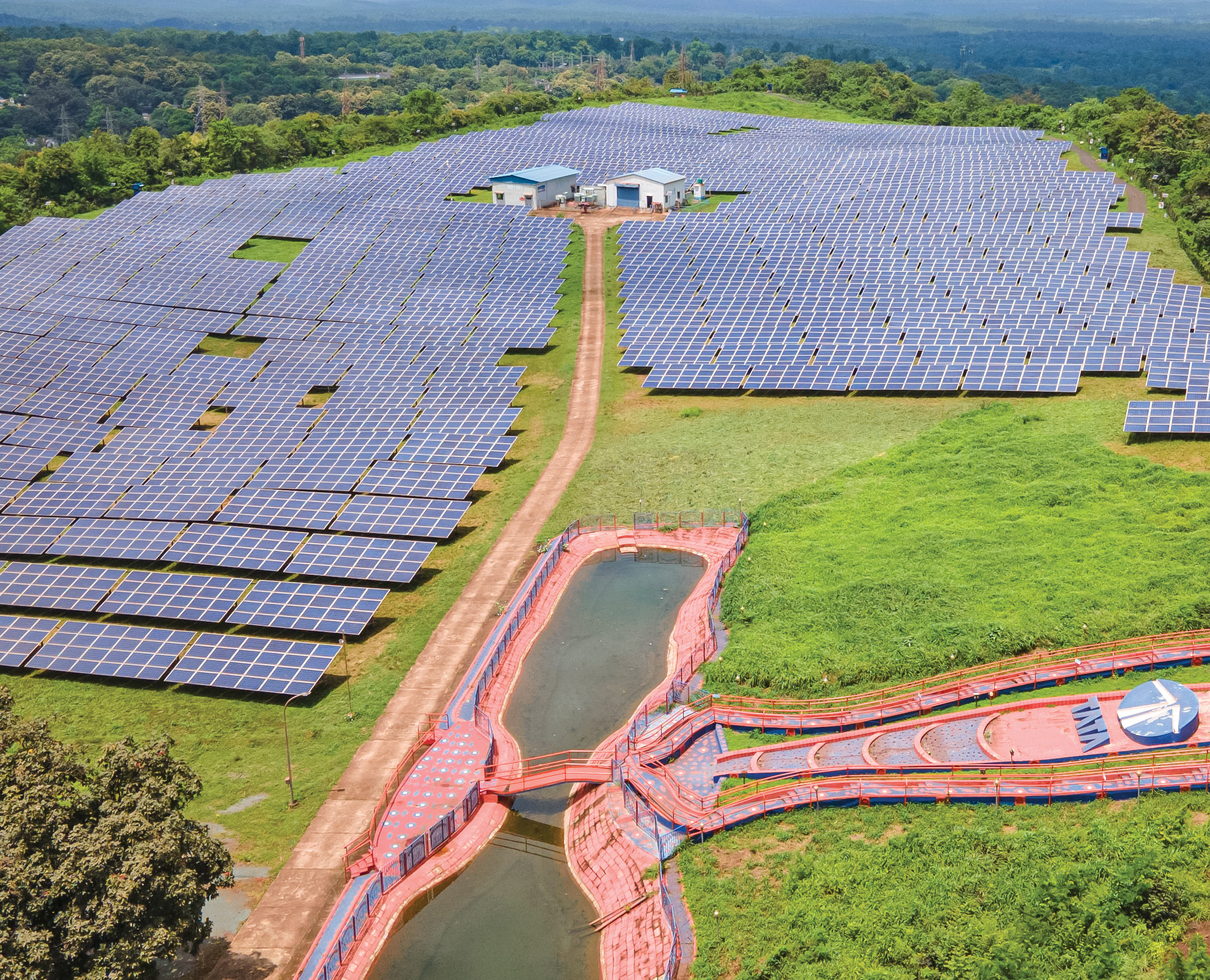
Tata Steel uses its Enterprise Risk Management process to manage climate change and nature-related risks across the organisation in an integrated manner. The process employs a two-pronged approach—bottom-up and top-down—to comprehensively identify and assess business risks, develop early warning indicators, and create mitigation strategies for review by the Risk Management Committee of the Board.
Climate and nature-related risk and impact management
Tata Steel has undertaken a detailed and systematic assessment of the physical and transition risks in a TCFD-aligned independent third-party Climate Risk assessment focusing on its key steelmaking sites in India, the Netherlands, and the UK.
To manage nature-related risk and impact, Tata Steel has taken a pre-emptive approach by deploying six levers: Risk Screening, Third-party Biodiversity Assessment, Ecosystem Services Review, Development of Biodiversity Management Plan (BMP), BMP Implementation and Postimplementation Assessment tools. Inability to meet decarbonisation commitments and non-compliance to the CCTS targets pose reputational and financial risks to the Company. Tata Steel has adopted various mitigation strategies including increased use of renewable energy, non-fossil fuel alternatives and Nature-based Solutions. The physical climate risk is an emerging risk for the Company and mitigation strategies are being developed as per the ERM framework. Climate and nature-related risks assessed by Tata Steel span across operational, financial, reputational, regulatory, and legal risks.
Community engagement for risk and impact management
The Company prioritises people and the planet for sustainable outcomes. Key initiatives in India include water ecosystem projects in remote villages, achieving a groundwater storage potential of 101.6 million cubic feet for FY2024-25. Solar light installations in 13 villages and 16 hamlets provide affordable, zero-carbon energy. A climate-resilient agricultural (CRA) programme supports 33,000 farmers with training, soil testing, and weather advisories. Additionally, efforts to protect threatened species such as Blackbuck, Indian Peafowl, and Olive Ridley Turtles involve community awareness and conservation activities.
Climate and nature-related opportunities for the business
1. Taxonomy of Green Steel and procurement of less CO2 intensive products
The Ministry of Steel, Government of India has introduced the Taxonomy of Green Steel classifying steel based on carbon emissions and star ratings from 3 to 5 for products below the 2.2 tCO2e/tfs. Tata Steel is leveraging this shift by investing in initiatives, such as the EAF plant in Ludhiana, the scrap recycling plant in Rohtak and various decarbonisation measures.
2. Trading of carbon credit certificates
The Government of India is in the process of developing an Indian Carbon Market (ICM) to support decarbonisation in hard-to-abate sectors by assigning a price to greenhouse gas emissions through Carbon Credit Certificates (CCCs). The Bureau of Energy Efficiency (BEE) will set specific reduction targets for steelmakers, enabling companies that exceed these goals to earn CCCs. These certificates can then be sold for revenue, encouraging businesses to reduce their carbon emissions. Tata Steel may choose to create Nature-based Solutions (NbS) projects beyond its own operations and also participate in the voluntary carbon credit market.
3. Catering to the low carbon market economy
The EU's Carbon Border Adjustment Mechanism (CBAM) aims to incentivise low-emission steel production through cleaner production practices. In Europe, the Company is offering declaration-based, low-emission steel solutions under the brand names Optemis® and Zeremis® Carbon Lite catering to the rising demand.
Actions in the year gone-by
| Lever | Actions |
|---|---|
|
Pioneering the utilisation |
|
|
Relentless pursuit of |
|
|
Progressive strides in |
|
|
Eco-friendly |
|
|
Launch of |
|
|
Enhancement of green |
|
|
Promotion of Nature-based Solutions |
|
|
Transition to Electric Arc |
|
Tata Steel reports its ESG metrics in alignment with the Business Responsibility & Sustainability Reporting (BRSR) framework issued by SEBI, the Greenhouse Gas Protocol, International Financial Reporting Standards, S2 (IFRS) (erstwhile TCFD), Global Biodiversity Framework (GBF) and the UN SDGs.
Tata Steel reports its ESG performance through its Business Responsibility and Sustainability Report and ESG Factsheet, both part of Tata Steel's Integrated Report.
The environmental metrics include GHG emissions, Non-GHG air pollutants, Waste generated, Waste disposal, Waste reused, recycled and recovered, Water discharge, Water withdrawal from water stress areas, etc.
For details, please refer to Tata Steel’s Integrated Report for FY2024-25.
Please refer to the ESG Goals section in Tata Steel’s Integrated Report for FY2024-25.